
Major depressive disorder (MDD) is a mood disorder that involves an abnormally low or sad emotional state. People affected by MDD cannot independently improve their mood.
MDD is one of the most common mental health conditions in Canada, affecting more than two million people across the country.
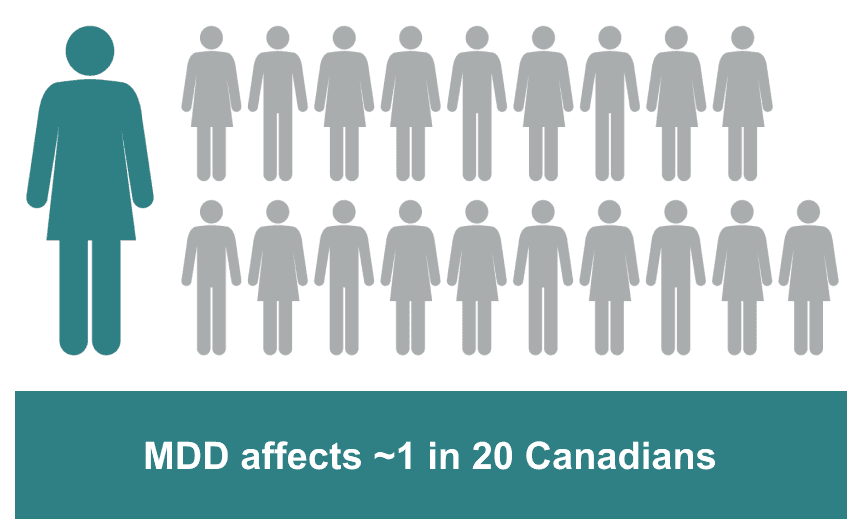
MDD is more common in women, though the male/female difference diminishes with increasing age in Canada, and most commonly affects people between the ages of 18 and 45.
Symptoms of Major Depressive Disorder
Although major depression may occur only once during your life, people typically have multiple episodes. During these episodes, depression symptoms occur most of the day, nearly every day and may include:
Feelings of sadness, tearfulness, emptiness or hopelessness
Angry outbursts, irritability or frustration, even over small matters

Loss of interest or pleasure in most or all normal activities, such as sex, hobbies or sports
Sleep disturbances, including insomnia or sleeping too much

Tiredness and lack of energy (even small tasks take extra effort)
Reduced appetite and weight loss, or increased cravings for food and weight gain

Trouble thinking, concentrating, making decisions and remembering things

Frequent or recurrent thoughts of death, suicidal thoughts, suicide attempts

Unexplained physical problems, such as back pain or headaches
Anxiety, agitation or restlessness
Slowed thinking, speaking or body movements
Feelings of worthlessness or guilt, fixating on past failures or self-blame
When someone experiences five or more of these typical depression symptoms for at least two weeks, this is called a “major depressive episode”.
Impact on day-to-day activities
For many people, depression symptoms are usually severe enough to cause noticeable problems in day-to-day activities, such as:




More than just a case of the blues, depression isn't a weakness. It's not something you can simply "snap out" of, either – depression may require long-term pharmacological and non-pharmacological treatments.